

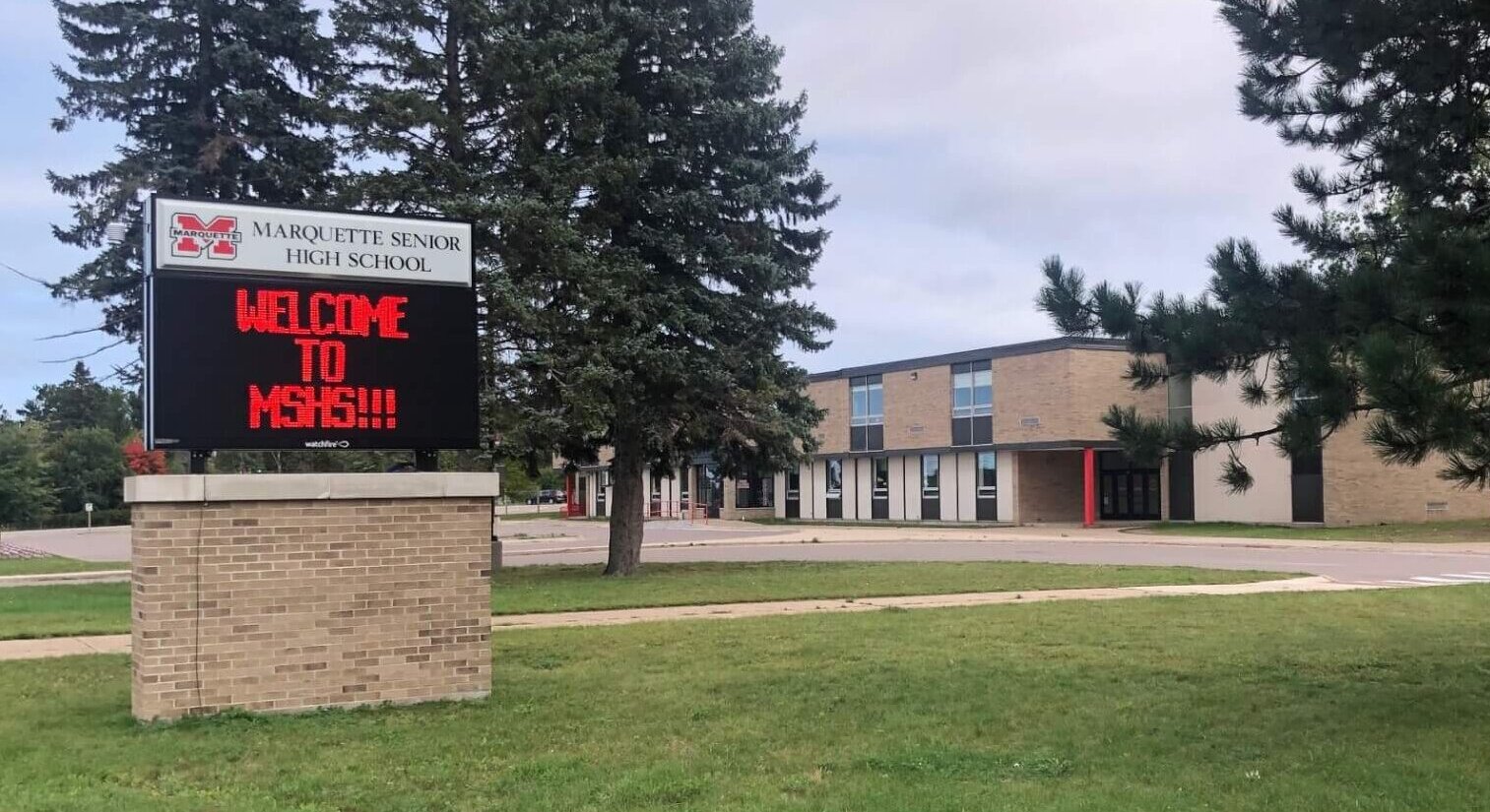
Most people… not all, but most people would agree that good schools are important, not only to our local communities, but to our society at large.
In fact, not long after the birth of our nation, our leaders began the process of what would become public education… available to all.
According to the Center on Education Policy, “The Founding Fathers maintained that the success of the fragile American democracy would depend on the competency of its citizens. They believed strongly that preserving democracy would require an educated population that could understand political and social issues and would participate in civic life, vote wisely, protect their rights and freedoms, and resist tyrants and demagogues.”
Some might suggest those goals have yet to be reached, but regardless, the idea of public education took hold, and in the early 1830s, the state of Massachusetts created what they called “common schools,” which served as a template for universal education.
It’s been a long and winding road which has brought us to today, where public education is, finally, available to all, although at dramatically different levels of commitment. Financed primarily by property taxes, we find school districts in wealthy areas that want for nothing, while neighboring school systems might be struggling to keep the lights on.
Which brings us to the current issue facing residents who live in the district served by the Marquette Area Public Schools (MAPS).
Funds and Financing
Full disclosure… I am not an expert in the areas of property taxes, sinking funds, bond proposals, and generally, anything that involves more money than a house payment. So I’ll take a shallow dive into a matter of concern to the entire Marquette community.
MAPS, under the direction of Superintendent Zach Sedgwick and the MAPS School Board, has released a survey intended to provide feedback from local taxpayers about a bond proposal which would facilitate as much as “$100 million of critical infrastructure and building system needs.”
According to the survey’s introductory info, a state funded infrastructure study came up with the nine-figure estimate, which aligns with what a similar MAPS study concluded.
I thought it interesting that the state’s project team that came up with the estimate includes companies which appear to be in the business of providing such infrastructure improvements. While I’m sure they’re the experts in such things, I doubt their interests lie in saving taxpayer dollars, at least in the short term.
Beyond my skepticism, and assuming the infrastructure needs are legit, which I believe they probably are, the question now becomes… how much financial commitment are area residents willing to make to our schools?
How Much is Enough?
Opponents of a new bond might suggest a recent sinking fund, approved in 2023 and which already provides MAPS with $1.3 million each year for building repairs, should be enough. You’d think, huh?
But infrastructure improvements are a different animal than building repairs. The survey breaks down the needs outlined in the proposal into three priority levels, with each one requiring a different financial commitment.
The most critical needs include a number of things you’d expect to find in buildings with an average age of 60 years. I could list them all here, but you’d be better off finding them yourself in the mailed survey, or at the MAPS website. I’ll summarize it by saying, it’s whatever you think “infrastructure” needs might be. Also, as you might imagine, it can be pretty pricey.
With three levels of priorities, respondents to the survey can indicate how far they want to dig into their own budgets to finance a variety of needs… and wants.
How Deep Are Your Pockets?
If the social media reaction to the bond proposal idea is any indication… and it usually is, I fear this one is going to be a tough sell. Combined with the city’s recent tax increases, a lot of folks are starting to wonder how long they can afford to live here, particularly those on a fixed income.
Some of those voicing their opposition cite a lack of planning on the part of administration. Like… why are you asking for this money now? Why didn’t you plan ahead? Well… they are planning ahead. The schools, as they now stand, work. But in order to keep working, they need upgrades, many of which will mean more efficient, and less costly, operation.
Other opponents are reprising their dissatisfaction with the high school’s nickname change. Credit to them, as they said when the Redmen moniker was dropped, they wouldn’t support any upcoming asks for more money. Seems kind of petty to me, but again, I was never a Redman.
A Say in the Matter
No surprise, administration and the school board receive the lion’s share of the criticism. I’m guessing they’re just trying to do their jobs… those they were hired and elected to do, but darn it, we’ve got to be mad at somebody.
To their credit, they’re not trying to ram something down our throats, with no public input. That’s what the survey is for. And, in addition to that, they’ve scheduled Facility Planning Community Listening Sessions for September 22nd and 23rd at 5:30pm, in the high school’s Little Theater.
Honestly, I don’t know how much is too much for each household in the Marquette school district. Are our taxes too high? Sure… whose aren’t? But is quality education where we draw the line in the sand? When you’re looking for things to be proud of in your community, do you look at your schools? I do, and I understand good schools don’t come cheap.
Return on Investment
I know it’s not exactly like the stock market, but money spent on schools is an investment. Not all benefits can be measured by the dollars in your retirement account. According to a report in the Center for Strategic & International Studies, “Investments in education underpin social cohesion, economic growth, competitiveness, and innovation.” Sounds good to me.
Is it okay to challenge school leaders regarding how, and how much money of ours they intend to spend? Absolutely. Nobody likes to leave blank checks laying around, but at some point you have to put trust in those you’ve assigned to make the important decisions.
If you’re on the fence with this, and have concerns not addressed here, you should probably consider attending one of the listening sessions. They’re your chance to go back to school… and learn something.