Taxes
Taxes… that’s the five-letter expletive less fashionable than most of the four-letter variety. In this divided world, the one area where you might come closest to unanimity would be our collective disdain for taxes.
Without even knowing what they’re for, most people would say “no” when asked if they’d like to pay more in taxes.
And yet, with that mindset confronting them, the Marquette Area Public Schools Board of Education will be asking the community to say “yes” to a bond proposal for… more taxes.
Geez… aren’t we already paying enough? When you combine property taxes with gas taxes and income taxes and sales taxes and gift taxes and inheritance taxes and corporate taxes and capital gains taxes and dividend taxes and additional overcharge taxes and… wait, that last one was from Seinfeld.
Anyway, yeah… we pay a lot of taxes. And if the people running MAPS have their way, we’re going to pay a little more. Of course, they can’t make that happen without our go-ahead.
Decision Day
On May 5th, the community will be asked to approve a bond measure for a $60 million facilities improvement project. If $60 million seems like a lot, that’s because it is. But like the old Fram oil filter ad said… pay me now, or pay me later. And waiting until later would likely make 60 million look like a bargain.
So, what are we going to get for all that money? In scholarly terms, we’re going to be addressing the requirements for self-actualization found in Maslow’s Hierarchy of Needs. At least, that’s how Superintendent of Schools Zack Sedgwick is framing it. Paraphrasing Dr. Maslow, Sedgwick says, “kids are never going to reach their full potential if their basic needs are not being met.” In other words, that’s the least we can do.
If that sounds like some new age academic gobbledygook, it isn’t. In fact, it’s more like a big picture master plan for how to take our kids from kindergarten to graduation and end up with young adults ultimately prepared to face the changing world. Also, Maslow came up with it back in the 1940’s, so… not new.
I’m no academic, but I am familiar with Maslow’s pyramid specifying the basic human needs required for personal fulfillment. It’s been called a “framework that describes what motivates people.” We used it in the Residence Hall Program at Northern when I was an R.A. there back, uh… a few years ago. It serves as an excellent blueprint for desired outcomes.
Meeting Physical Needs
Check it out and you’ll see the bottom levels, upon which the rest are built, deal with physical and emotional security and freedom. Applied to our school system, that means buildings that are safe, and designed to foster a learning environment which gets the most out of teachers and students.
Okay, you might still be wondering what we’re getting for our 60 million. You know… tangible stuff. Basically, it’s facility improvements across the board. As our superintendent says, it will impact “every student and every building.”
According to Sedgwick, our school buildings average 60 years of age, and we haven’t had any major improvements in 30 years. If you know anything about buildings, especially bustling school buildings, there comes a time when duct tape no longer does the job.
“The structures are solid, they just need to be updated,” Sedgwick has said. $60 million worth? At today’s prices… yes. We’re talking about seven schools and 750,000 square feet of floor space. Strap that on.
60 Million? For What?
So how do you decide how much to spend, and on what? According to Sedgwick, the scope of the plan and details of the proposal are based on facility evaluations done by both MAPS and the state agency assigned to such things. Also, they relied heavily on information gathered in a survey taken last year. “We asked and we listened,” he said, calling this “a community driven initiative.”
The initial figure they came up with was north of 60 million, but based on public sentiment made apparent in the survey, the board settled on a dollar figure it appeared the community would support.
Key word “appeared.” Surveys, though valuable, don’t guarantee anything. They’re only definitive on Family Feud.
Two Sides
There will be opposition. There are households in this town where even the smallest increase in expenses can put the foundation of Maslow’s Hierarchy in danger. We’re talking food, housing, utilities… things like that.
And though I’m reluctant to bring it up again, there are probably still a few out there who’ve been counting the days until they could settle the score on the nickname make over. I’m not sure what voting to deny quality education to our own kids would accomplish, but maybe that’s just me. And a few other Sentinels.
In recent history, the community has been supportive of school bond issues. It’d be good to see this one follow suit. After all, we’re the ones who elected the board members who unanimously support this proposal. I’m not suggesting we rubber stamp everything they throw at us, but I’m generally inclined to lean in their direction. It’s what we elected them to do!
Details
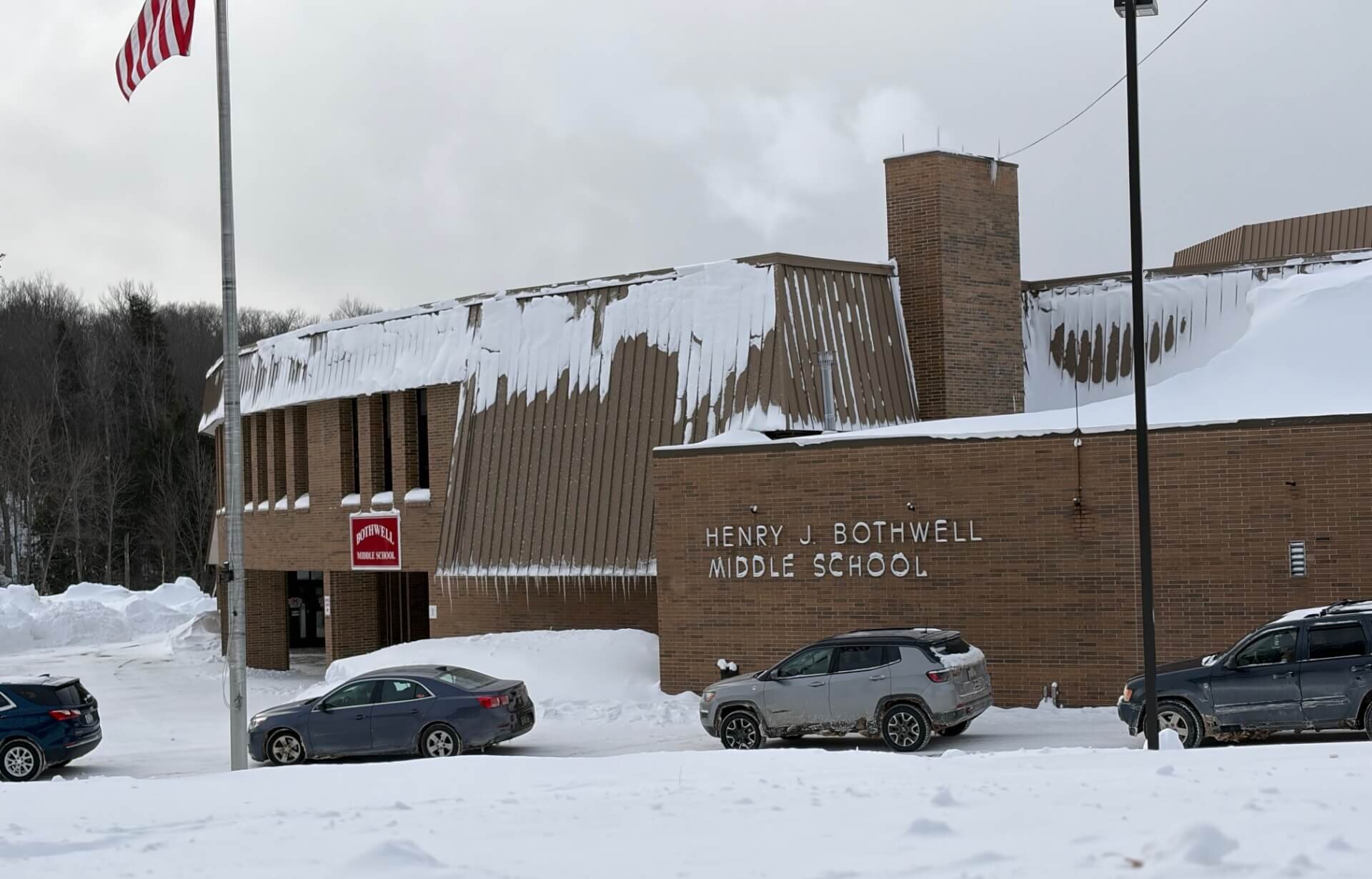
Specifics of the plan address what Sedgwick characterizes as “safety, infrastructure, and programming.” That includes things like security updates at every school, a total renovation of the second floor at Bothwell Middle School (seen above), and improved environments for academics, career tech, arts, and athletics.
Sedgwick and the project team went over the plan back in November at the MAPS board meeting held in the Graveraet gym. That would be the Sydney B. Adams Memorial Gymnasium. Remember Mr. Adams? Me neither. If your school building is looking ahead to its second century of operation, it’s probably due for some modernization.
Bottom Line
So… what’s it going to cost you? Well, it’s for 1.55 mills on a 28 year bond. 1.55 means you pay $1.55 per $1,000 of Taxable Value, which is generally 50% of your home’s market value. You can do your own math. I did mine, and it really wasn’t all that much.
Sedgwick points out that with the 1.55 mills added to the two bonds currently on the books, our total millage would be 2.86 mills… which is “below the regional and state average.”
I know that’s supposed to make us feel better, but it’s hard to ever feel much better about more taxes. Unless, in this case, you appreciate the value of quality public education for your community.
The truth of the matter is, taxes is not always a four-letter word.